
The single-professional dog owner is the new normal
US Census data shows single-person households crossed 28% of all households in the early 2020s and have continued rising. The APPA’s National Pet Owners Survey has tracked pet ownership in single-person households expanding faster than any other demographic segment for over a decade. The “two-parents-and-kids-in-the-suburbs” archetype that defined dog ownership in the 1990s is no longer representative.
What’s not changed: the dog. Domestic dogs evolved as social pack animals with strong attachment systems. They were not designed to be alone 9+ hours a day, every day, regardless of breed. So the question for solo professionals is not “can I keep a dog alive in my apartment” — almost any breed can survive that. The question is “can I maintain the dog’s welfare while running my life,” and the answer depends heavily on breed selection plus support infrastructure.
The six-axis scoring that actually matters for solo owners
The breed compass scores 282 breeds on six axes (energy, shedding, trainability, apartment fit, kid-friendliness, and barking). For solo professionals, three are decisive:
- Energy ≤ 3 of 5 — High-energy breeds become destructive or anxious without daily structured exercise that a 9-hour workday makes hard to provide
- Apartment fit ≥ 4 of 5 — This factor captures barking frequency, indoor space tolerance, and noise sensitivity
- Shedding ≤ 2 of 5 — Small living spaces amplify shedding’s effect on quality of life
Training difficulty and kid-friendliness drop in priority for solo owners. The “Solo · Apartment” preset on the breed compass applies these three filters automatically and narrows 282 breeds down to 30-40 candidates in one click.
Breeds that actually work for solo schedules
Cross-referencing breed temperament data, several breeds consistently emerge as suitable for single working professionals:
- Cavalier King Charles Spaniel — Gentle, low-bark, adapts to small spaces. Health screening matters (heart disease)
- Basset Hound — Famously low-energy indoors. Surprisingly tolerant of long alone periods
- Greyhound (retired racers) — Often called the “40-mph couch potato.” Adopting a retired racer is a cost-effective path and the dogs are usually already well-socialized
- Shih Tzu — Companion breed by design. Low exercise needs, low barking
- Bichon Frise / Toy Poodle — Low-shedding, moderate energy, social. Training-responsive
- Chihuahua — Tolerates apartment life well. Bark frequency varies considerably by individual
Breeds that consistently struggle with solo schedules — even with dog walker support:
- Border Collie, Australian Shepherd — Bred for daylong work. Apartment + 9-hour solo time = behavioral problems
- Beagle — Vocal, scent-driven, can become a serious noise complaint risk
- German Shepherd, Belgian Malinois — Strong attachment, high exercise needs, often best in multi-person households
- Jack Russell / Parson Russell Terrier — Compact but extremely high energy and stimulation needs
- Husky / Malamute — Working sled dogs. Apartment ownership is consistently unsuccessful
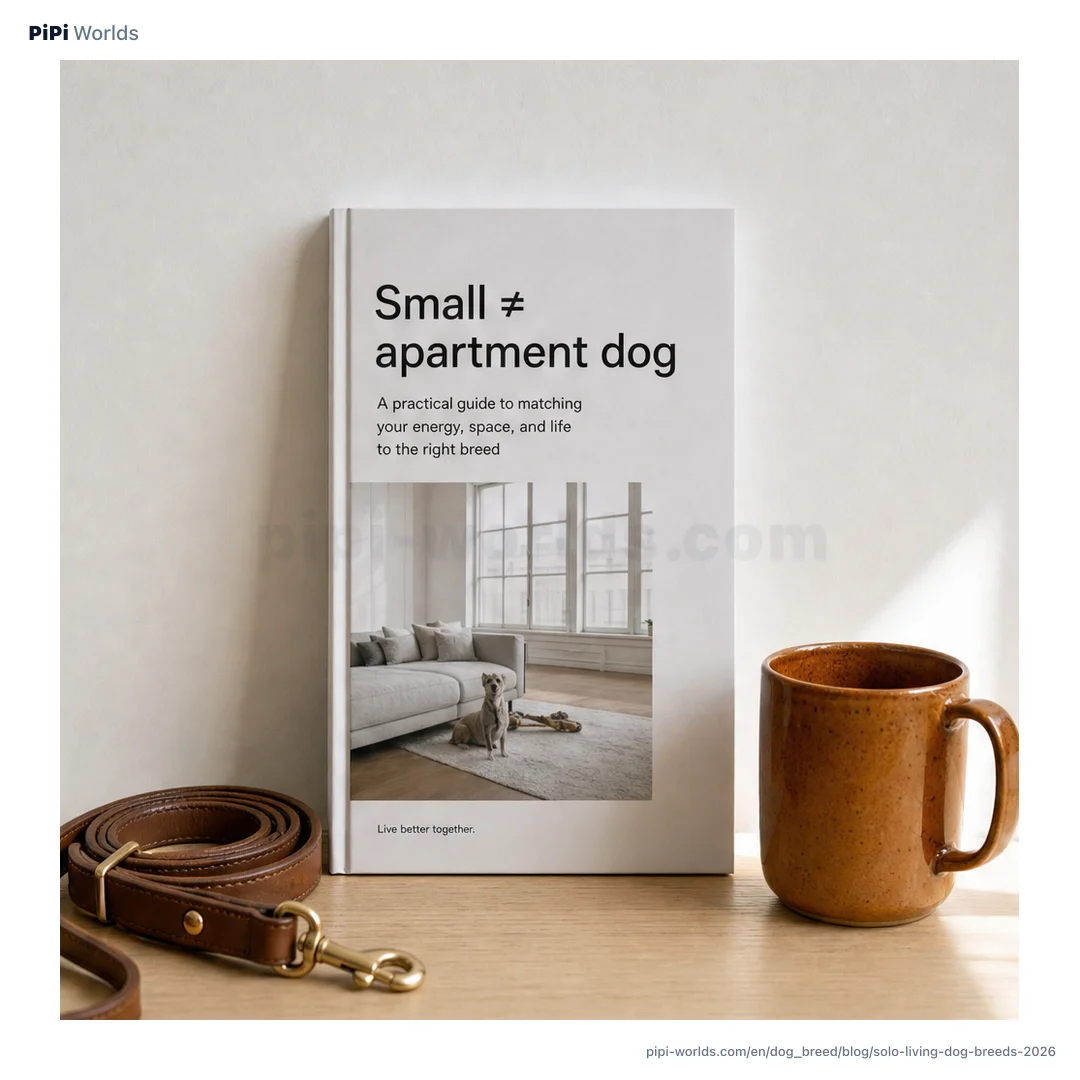
The “small = apartment-friendly” assumption is the most common mistake. Energy level matters more than size.
The infrastructure stack: what you actually need
Adopting a dog as a solo professional isn’t just choosing a breed. It’s building a support system that compensates for your working hours.
- Dog walker (3-5x/week) — A midday 30-minute walk breaks up the workday and is the single highest-ROI support service. Average cost in major US cities: $20-25 per visit. Budget $300-500/month
- Doggy daycare (1-3x/week) — More expensive ($35-60/visit) but provides socialization and structured exercise that solo walks can’t match
- Pet camera with treat dispenser — $100-200 one-time. Check on the dog midday, dispense a treat, lower anxiety
- Enrichment toys (Kongs, snuffle mats, puzzle feeders) — $20-50. Extend mental engagement during alone hours
- Pet insurance — $40-80/month for most breeds. Higher for Frenchies, Bulldogs, giant breeds. Worth it for emergency care
Total monthly support cost for a single dog in a major US city in 2026: $400-700 on top of food and basic care. Plan for $5,000-8,000 annual all-in cost for solo dog ownership in expensive metros.
Apartment-specific considerations
The apartment itself adds constraints worth knowing about:
- Lease restrictions — Most pet-friendly leases require proof of vaccination, license, and pet deposits ($200-500) or monthly pet rent ($25-75)
- Breed restrictions — Some buildings ban specific breeds. Confirm before adopting
- Weight limits — Common cap is 25-40 lbs in apartment buildings. This effectively rules out medium and large breeds in many buildings
- Elevator etiquette — High-rise buildings often have rules about leashing in elevators, hallway barking, and designated relief areas
For navigating apartment-specific regulations and the licensing layer, see the US dog licensing guide. For comparing physical breed traits within these constraints, the breed compass “Solo · Apartment” preset is the fastest filter.
What about adopting from a shelter vs. breeder?
For solo professionals, shelter adoption has specific advantages. Adult dogs (3-7 years) often come pre-housebroken, already know basic commands, and have known energy profiles you can match to your lifestyle. Puppies require 4-6 months of intensive training and house-breaking that a 9-hour workday makes extremely difficult.
If you’re set on a specific breed, breed-specific rescues exist for almost every major breed. They typically place adult dogs whose previous owners couldn’t continue caring for them — often a better fit for solo schedules than a breeder puppy.
Bottom line
Single-professional dog ownership is increasingly common and well-supported in 2026. The biggest risk factor is breed mismatch: solo owners who adopt high-energy working breeds because they’re popular usually end up with stressed dogs and stressed owners.
Match your living situation with the breed compass “Solo · Apartment” preset, plan for $400-700/month in support services on top of basic care, and consider adult dogs from shelters or breed-specific rescues. For the 30-day adoption checklist including licensing, microchip registration, and vet visits, see the US dog licensing guide.